



How Quality Control Works in Garment Manufacturing: Methods and Importance
24 Feb 2026
Activecool fashion
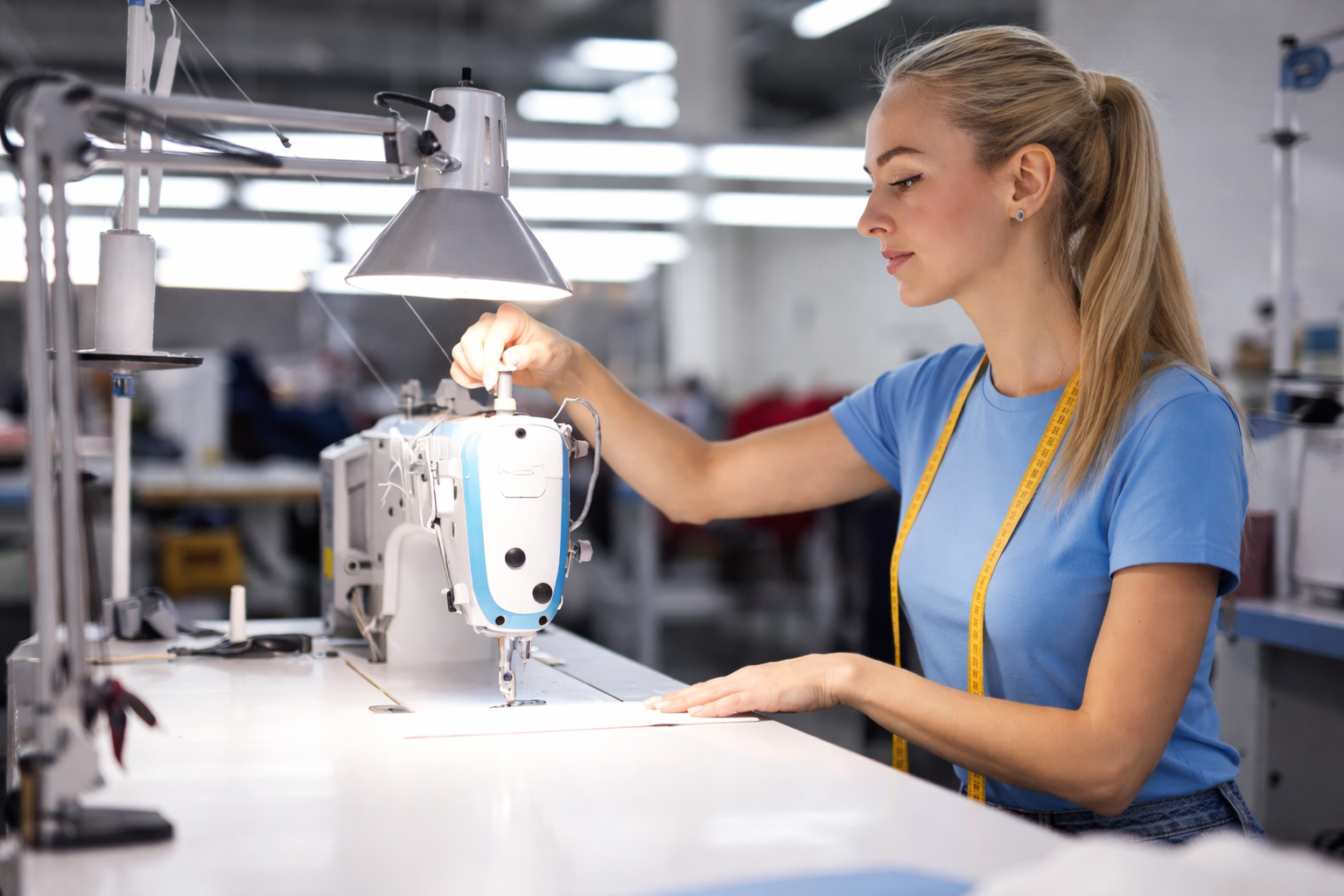
The quality control process in manufacturing is a standardized method for identifying and preventing defects. It starts with the selection of raw materials and extends through final shipping procedures. This is not a one-time thing, but a system that continuously recognizes issues before they arise. By doing so, you can maintain uniformity across your wholesale apparel business. Thus, we shall discuss the role of quality management in the clothes market.
Quality Control for Clothing Manufacturers
It is an operation that makes the garments meet the specifications set. Apparel is one area where any defect would lead to customer complaints and returns.
How quality control defines standards and expectations:
- Garment quality standards.
- Defined production benchmarks.
- Consistent output control.
- Brand expectation alignment.
- Manufacturing accountability systems.
- Market readiness assurance.
When working with manufacturers, quality control becomes a tool for open communication. It is very clear in expectation and makes teams accountable.
Pre-Production and Material Inspection
Fabric quality control is important because flaws may arise later in manufacturing. Inspectors look for weaving defects and color inconsistencies, such as staining or holes.
Preventing material-related defects early using:
- Fabric defect detection.
- Trim quality checks.
- Material durability assessment.
- Color consistency validation.
- Shrinkage risk evaluation.
- Production input approval.
Consistency is very important when designing fashion apparel. In addition, initial inspections may eliminate the use of inappropriate materials.
Approval of Patterns and Evaluation of Samples
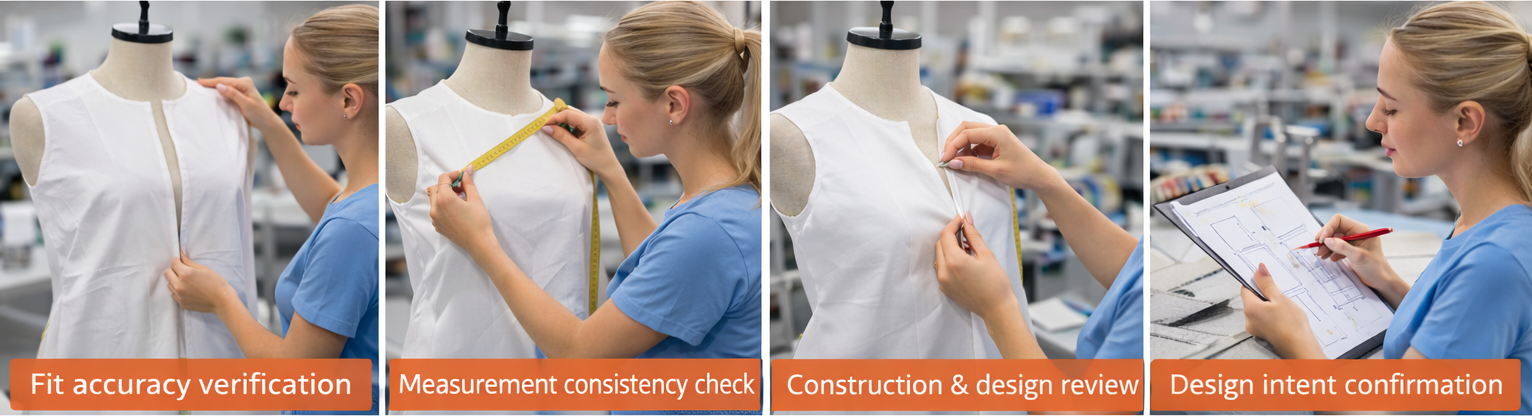
The pre-production sample allows the buyer to check the fit, measurements, and construction. It is a way to ensure that what you liked on paper is translated properly into clothing.
The importance of design accuracy before bulk production:
- Fit accuracy verification.
- Measurement consistency check.
- Construction method review.
- Design intent confirmation.
- Sample approval process.
- Pre-production correction.
All necessary adjustments are made at this time to prevent mistakes during production. By investing time here at this stage, you greatly reduce the chance of having to rework later.
Check out the complete design guide for branded t-shirts here.
Quality Control during Production
As opposed to waiting for final production, inspections are conducted at every step. This helps to identify sewing errors, inconsistencies in measurements, or defects in construction.
The need for real-time quality monitoring:
- Early defect detection.
- Production flow control.
- Waste reduction strategy.
- Batch consistency maintenance.
- Cost efficiency improvement.
Inline inspections for you ensure that fewer issues are discovered at the point of no return. They also improve efficiency as changes are cheaper and faster.
Stitching Quality and Workmanship Inspection
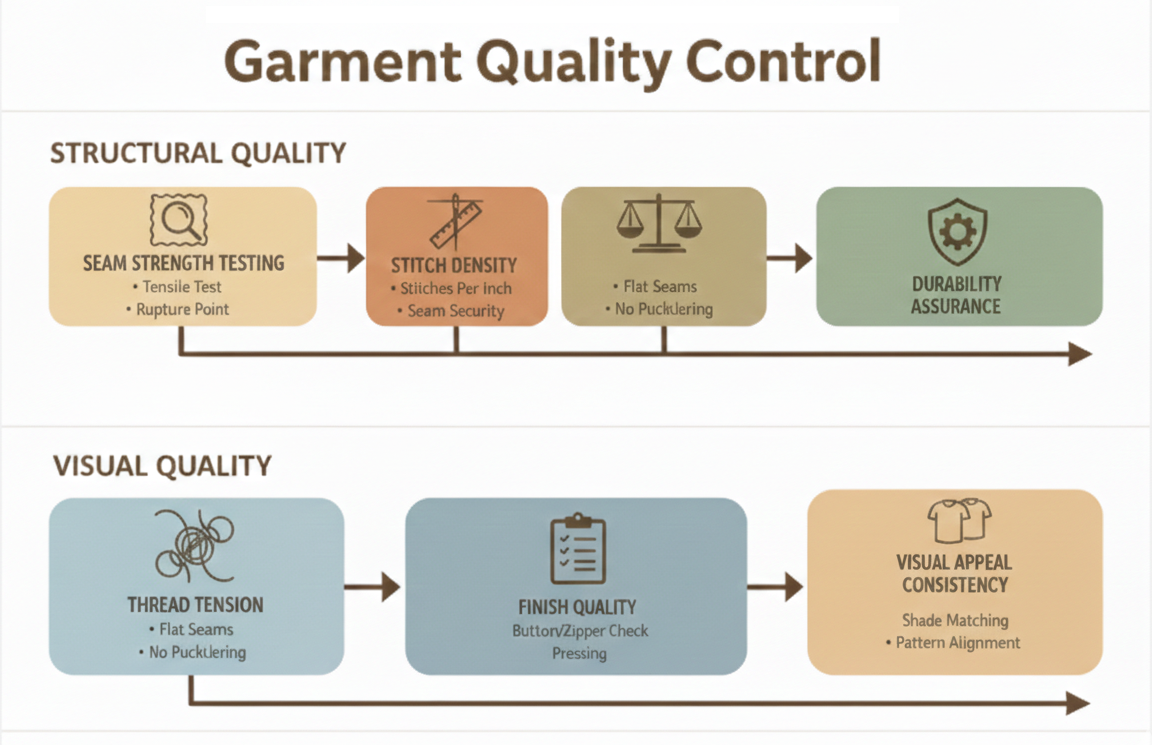
Garment durability is also a critical feature of the quality of the stitching. The inspections will determine the strength of the seam, stitches, thickness, thread tension, and finishing details.
Ensures structural and visual garment quality with this process:
- Seam strength testing.
- Stitch density control.
- Thread tension balance.
- Finish quality review.
- Durability assurance methods.
- Visual appeal consistency.
When it comes to uniform production, sturdy seams will ensure the longevity of garments. Through strict standards, the quality of control has a direct impact on your brand image.
The Measurement Consistency
The accuracy of measurement is a notable issue during the process of manufacturing clothing. Quality control personnel measure final clothes against size charts to guarantee consistency.
How to ensure size accuracy and consistency:
- Approved size charts.
- Measurement tolerance checks.
- Batch size consistency.
- Customer fit satisfaction.
- Return rate reduction.
- Brand trust building.
Consistency in sizes creates confidence in the case of the clothing market that you are selling in. Customers will have a higher likelihood of making a second order when they know what to expect.
Final Quality Inspection and Packaging Standards
The stage for quality control takes place after garments have been put together. The inspectors evaluate their overall appearance, cleanliness, and the accuracy of labeling.
Parameters of market readiness before dispatch:
- Visual defect inspection.
- Label accuracy verification.
- Cleanliness assessment process.
- Packaging quality control.
- Shipment approval checks.
- Market readiness validation.
The final inspection makes sure that the product is in good condition for sale. The proper folding, tagging, and packing are important since appearance is everything.
Controlling The Product Quality is Important for Your Business
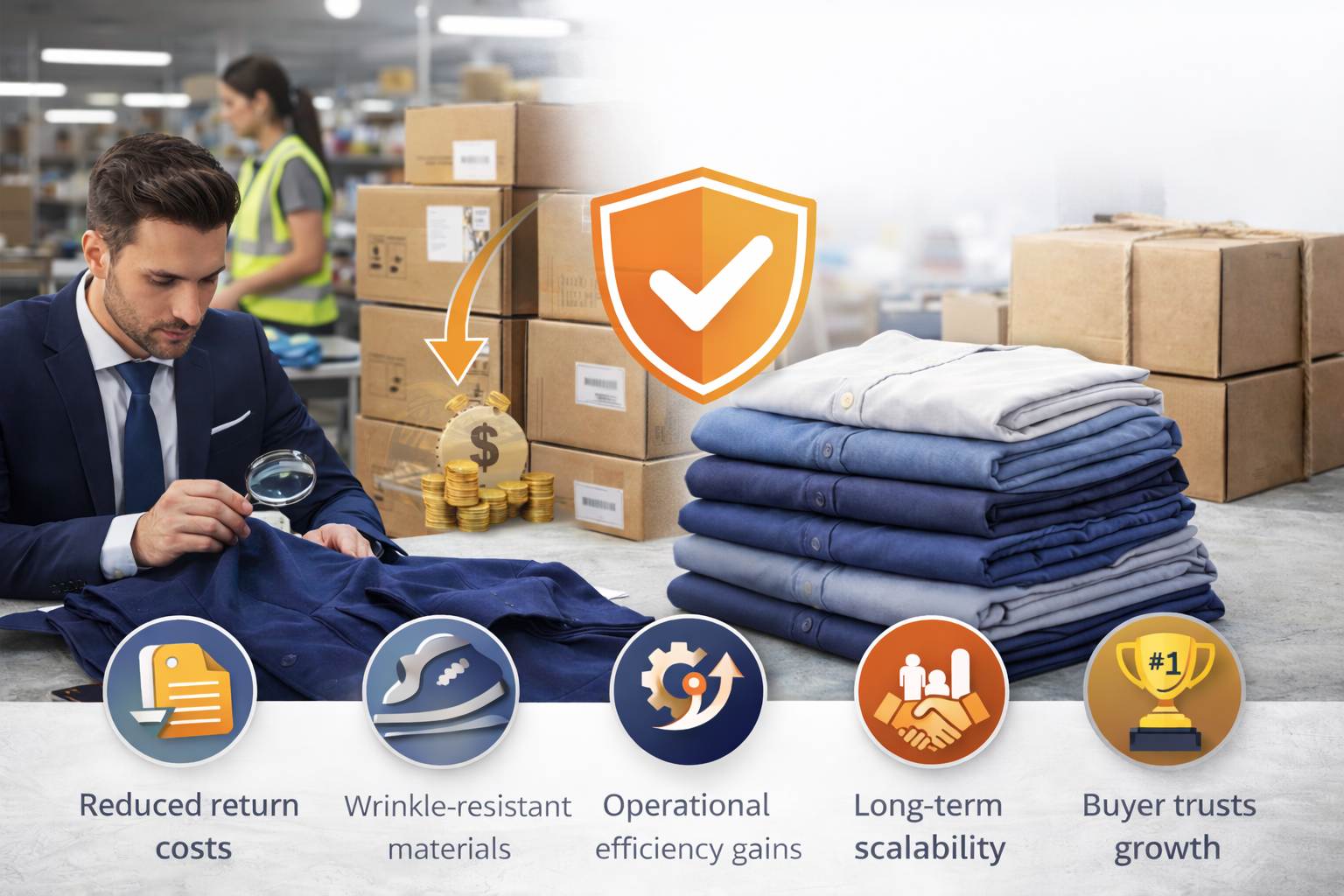
Reducing the number of defects reduces the number of complaints and returns as well. This results in better management of costs and better relationships with everyone.
The business impact of quality control:
- Reduced return costs.
- Strong brand credibility.
- Operational efficiency gains.
- Long-term scalability.
- Buyer trusts growth.
- Competitive market advantage.
In the wholesale market of apparel, consistent quality is a key factor in the long term. Moreover, wholesalers love suppliers who will give them high-quality products without any surprises.
Discover how to pick quality apparel manufacturers in Singapore.
Working With a Reputable Name in the Apparel Industry
Selecting the best manufacturing partner is vital if you desire effective quality control. If you're in search of quality, ActiveCool Fashion delivers reliable solutions. They deal not only in wholesale apparel but also in custom uniform manufacturing.
Perks of partnering with a notable firm in ActiveCool Fashion:
- Trusted production partner.
- End-to-end inspections.
- Quality-focused processes.
- Transparent communication model.
- Market-ready garments.
- Long-term reliability.
Conclusion
The quality control process in manufacturing garments is a necessary technological procedure. Along with that, it's a long-term investment for the future of your company. Once you understand the significance of quality checks, you may realize success in the long term. To do that, however, you must deal with the best garment manufacturers. Therefore, visit ActiveCool Fashion to explore the best expertise for your brand in the apparel industry.
FAQs
What exactly is quality control?
It is a method that is used to make sure garments are in compliance with the standard requirements. The standards are based on the following parameters.
- Fit.
- Stitching.
- Design.
What are the benefits of quality control?
The perks of quality control are given below.
- Minimize returns.
- Save money and effort.
- Building a good relationship with retailers.
How important is it to have an inline inspection?
The significance of inline inspection is as follows.
- Detecting issues earlier.
- Reduces waste.
- Prevent delays in production.
How can clothing companies ensure the same quality?
The company needs to follow the standardized processes given below for quality.
- Conducting regular checks.
- Train staff properly.
- Keep a check on customer feedback.